
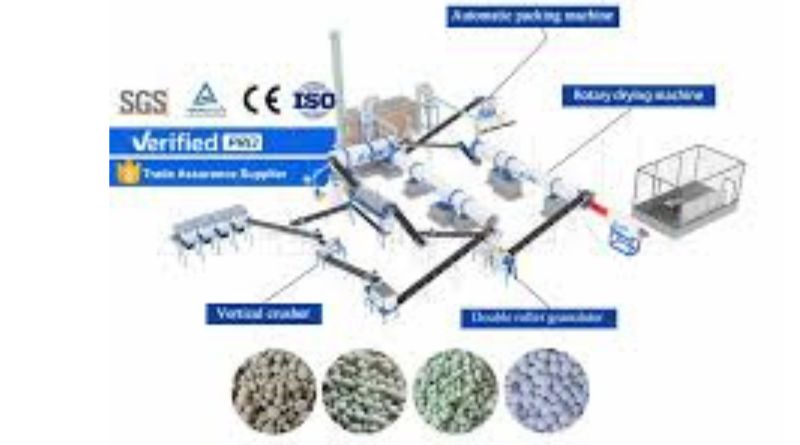
The modern agricultural industry demands efficiency, consistency, and high-quality products, making automation a key factor in NPK fertilizer production. Fully automatic NPK fertilizer production lines are designed to streamline every stage of manufacturing, from raw material handling to granulation, drying, cooling, and packaging. For producers looking to maximize output and reduce operational errors, integrating advanced automation into a fertilizer production line is no longer optional—it is essential. Trusted brands like Cementl provide turnkey solutions that combine a high-performance fertilizer blending plant with fully automated systems, ensuring smooth, reliable operations.
The Role of Automation in Fertilizer Production
Automation in a fertilizer production line transforms traditional labor-intensive processes into efficient, controlled, and predictable operations. A fertilizer blending plant is the starting point of this automation journey. Accurate mixing of nitrogen, phosphorus, and potassium ensures nutrient uniformity, which directly affects the quality of the final NPK granules. Automated feeding and mixing systems reduce human error and maintain consistent ratios in every batch. Cementl’s fully automatic fertilizer production lines integrate precise controls at the blending stage, guaranteeing uniformity and setting the foundation for high-quality fertilizer output.
Enhancing Productivity Through Granulation and Drying Automation
Granulation is a critical step where powdered fertilizer is converted into uniform granules suitable for storage and application. Automated granulators in fully automatic NPK fertilizer production lines optimize granule size, minimize material waste, and maintain nutrient stability. After granulation, drying and cooling processes must be carefully controlled to preserve granule integrity. Cementl’s automated systems monitor moisture levels, air flow, and temperature in real time, ensuring efficient drying and cooling while preventing damage or caking. By automating these steps, producers can achieve higher throughput without compromising quality.
Improving Quality Control and Consistency
One of the most significant advantages of a fully automatic fertilizer production line is the ability to maintain consistent quality across all batches. Sensors and control systems continuously track parameters such as moisture content, granule size, and material flow throughout the production process. This level of monitoring ensures that every bag of NPK fertilizer meets industry standards. Cementl incorporates advanced automation technologies into its fertilizer blending plant and production line, providing real-time feedback and adjustments to maintain optimal output and reduce material waste.
Reducing Labor Costs and Operational Risks
Manual operations in a fertilizer production line can be prone to human error, leading to inconsistent products, downtime, and higher labor costs. Automation reduces the need for manual intervention, allowing a small team to oversee large-scale production efficiently. Fully automated systems from Cementl minimize operational risks while maximizing productivity, enabling manufacturers to focus on scaling their business and improving market competitiveness. This balance of efficiency and reliability is particularly valuable for plants producing large volumes of NPK fertilizers for regional or national distribution.
Sustainability and Energy Efficiency Benefits
Modern fully automatic NPK fertilizer production lines are designed with sustainability in mind. Automated controls optimize energy use in mixers, granulators, dryers, and conveyors, reducing electricity consumption and operating costs. By integrating automation with a high-performance fertilizer blending plant, Cementl ensures that every stage of production is energy-efficient and environmentally responsible. Producers can therefore achieve not only high output and consistent quality but also a lower environmental footprint.
Conclusion: The Value of Automation in NPK Fertilizer Production
A fully automatic NPK fertilizer production line offers numerous benefits, from increased productivity and consistent quality to lower labor costs and enhanced energy efficiency. Automation transforms the fertilizer production process into a reliable, efficient, and scalable operation. By integrating advanced control systems into the fertilizer blending plant and subsequent stages, manufacturers can produce uniform, high-quality NPK granules with minimal downtime and waste.
Partnering with a trusted brand like Cementl provides access to cutting-edge machinery, expert engineering, and turnkey solutions tailored to both small and large-scale production needs. Fully automated systems ensure that your fertilizer production line operates at peak efficiency, giving producers a competitive edge in the rapidly growing agricultural market. By embracing automation, NPK fertilizer manufacturers can secure sustainable, profitable, and high-performing operations for years to come.